Immersive Rehabilitation Games
Special Healthcare Tracks @ Sheba Hospital
The Rehabilitation Center at Sheba Medical Center is one of the busiest buildings in Israel right now, supporting patients recovering from amputations, traumatic brain injury, stroke, and complex physical trauma.
Sheba has built something rare: an Immersive Rehabilitation Room, a room-scale interactive environment where three walls and the floor respond to patient movement using projections and sensors.
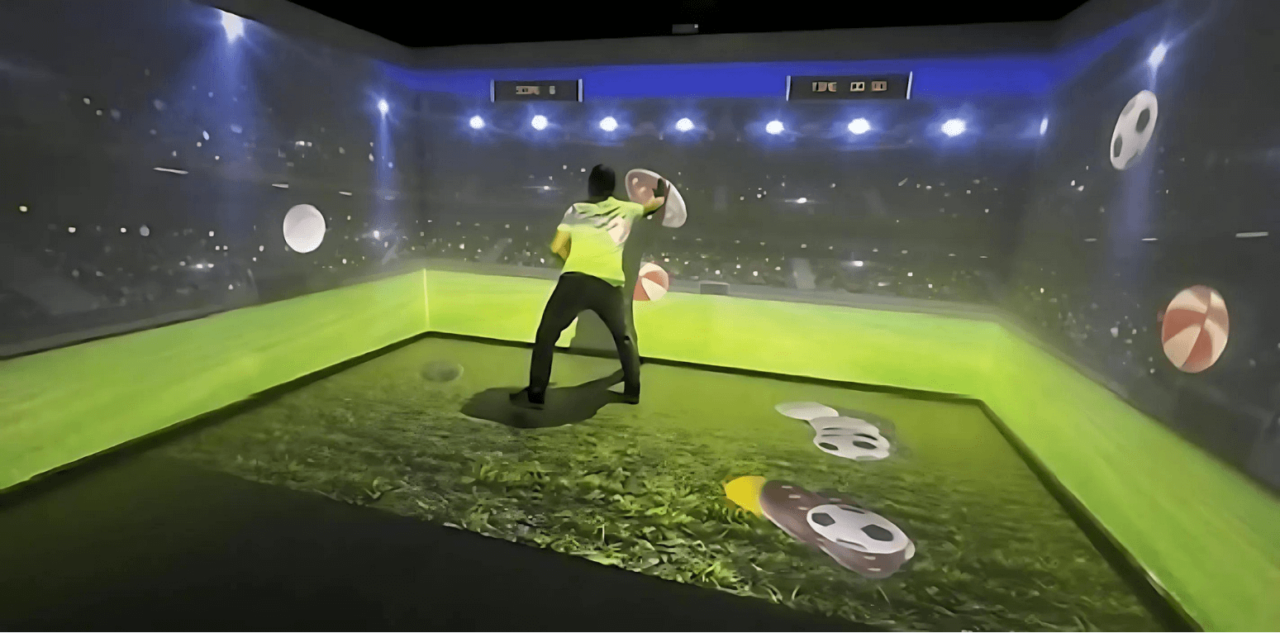
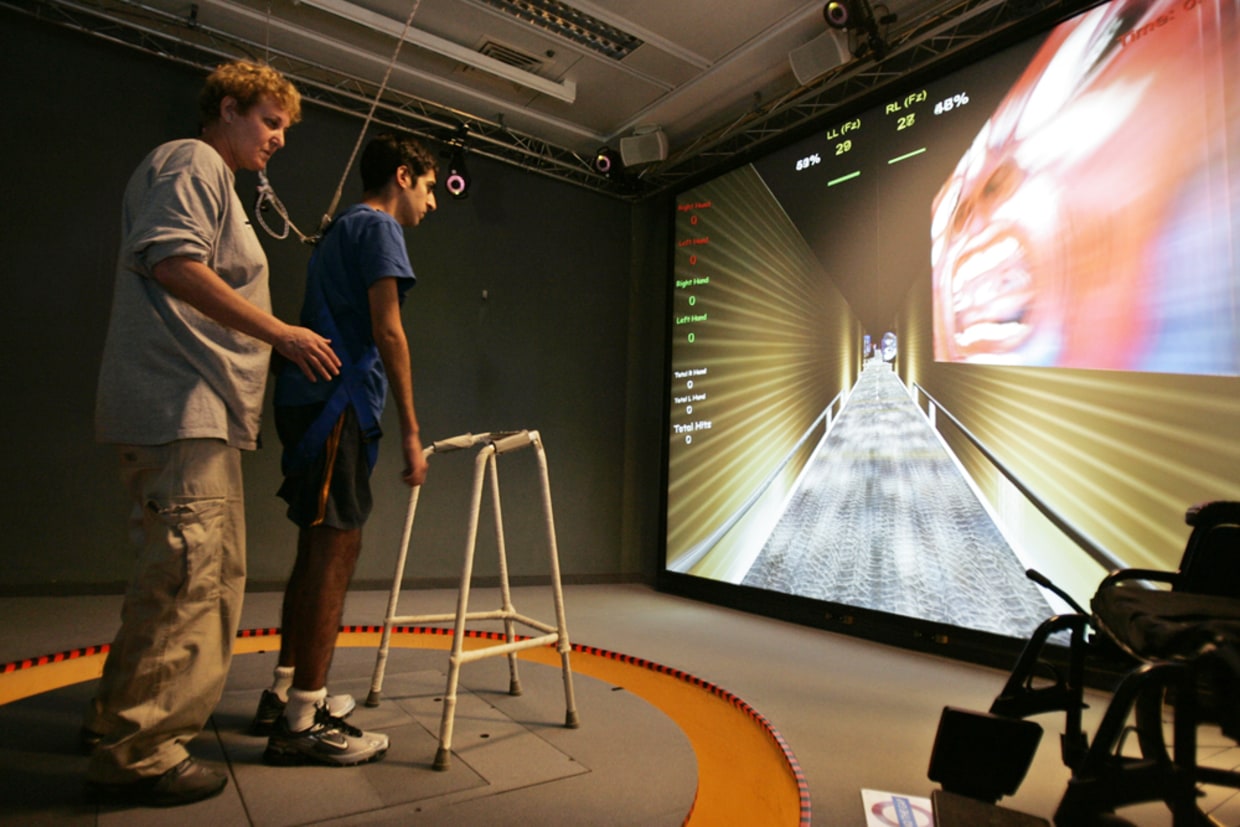
What this room needs now are games designed specifically for rehabilitation.
At this Game Jam, developers will work alongside therapists and patients to prototype immersive rehab experiences. In some cases, what you build in 48 hours may move directly toward real-world clinical use.
Why Games for Rehabilitation?
Conventional rehab often looks like this:
- Repetitive, grueling exercises
- Little immediate feedback
- Progress that's hard to feel
- High dropout rates and slower recovery
Games fundamentally change this dynamic.
Well-designed medical games:
- Create immediate feedback loops
- Make progress visible and motivating
- Adjust difficulty in real time
- Frame mistakes as learning, not failure
- Keep patients in a flow state, where effort feels like progress
Engagement isn't a bonus in rehab. It is the therapy.
Choose a Track
Teams will choose one of the following tracks. All tracks compete in a shared prize pool.
Track 1: Physical & Cognitive Rehabilitation Games
The Challenge
Design immersive, room-scale games that transform physical and/or cognitive rehabilitation into engaging experiences patients want to return to.
The room becomes the game:
- Movement is input
- Space is the interface
- The body is the controller
What You Might Build
- Forest walks combined with memory or attention tasks
- Shopping-mall navigation that challenges balance and working memory
- Interactive "gym" experiences using reach, step, or weight shift
- Dodging, catching, guiding, or arranging objects in space
Therapeutic Goals You Can Target
- Range of motion
- Balance and gait
- Coordination
- Working memory
- Attention and task switching
- Dual-tasking (movement + cognition)
You don't need realism. Clarity and adaptability matter more than fidelity.
Track 2: AI Scenario Creator for Therapists
The Challenge
Therapists do not want one-size-fits-all games. In later conversations, the rehab opportunity sharpened into an AI-assisted scenario creator: a way for clinicians to describe a therapy goal and quickly generate or adapt an immersive-room exercise.
Design tools or systems that allow therapists to:
- Describe a balance, attention, memory, mobility, or orientation task in ordinary clinical language
- Generate a first-pass scene, flow, objects, prompts, and success criteria
- Swap environments such as home, mall, gym, outdoors, or a hospital room
- Adjust goals and difficulty live during a therapy session
- Preview, test, and revise the scenario before trying it with a patient
Real Clinical Use Cases
- Exposure therapy (e.g., fear of heights)
- Preparing patients for returning home after long hospitalization
- Practicing daily tasks in a safe simulated environment
- Rehearsing real-world routines before discharge
Directions to Explore
- A no-code scenario editor for clinicians
- An AI prompt-to-scenario workflow
- Reusable templates therapists can adapt in minutes, not hours
- A simple handoff/export format that could later be adapted to the current immersive-room system
The goal isn't polish. It's usability under clinical time pressure.
Track 3: Motion Tracking for Rehab Games
The Challenge
Today, much of the immersive-room interaction can behave like a giant touchscreen. Another rehab track is to prototype movement-aware games that respond to the patient's body, not just taps or simple contact.
Design interaction concepts that assume:
- Camera, phone, iPad, or sensor-based movement input
- Posture, stance, reach, and balance awareness
- Repetition count, timing, range of motion, and smoothness feedback
- Multi-limb coordination and spatial interaction
Possible Directions
- A balance or reach task using webcam, phone, iPad, or existing sensors
- A movement-controlled game that gives immediate feedback on effort and accuracy
- A therapist-facing view showing repetition quality, timing, and progress
- A demo showing how motion input could work in the room or on a separate device
- Movement-based creation, navigation, or construction mechanics
This track is about expanding therapeutic reach, not increasing technical complexity.
Other Rehab Directions Discussed
These may become separate challenge pages if clinicians want to sponsor them directly. For now, they are adjacent rehab ideas teams can borrow from or combine with the tracks above.
- Questionnaire completion: make validated rehab questionnaires feel less daunting without changing the wording, order, scoring, or clinical structure.
- Phone / iPad home-exercise feedback: use camera guidance, simple reminders, and progress feedback so clinicians can understand whether home practice is happening and whether movements are performed consistently.
- Generic rehab engagement: make repeated therapy more rewarding, measurable, and easier to repeat across different rehab programs.
Design Principles (Across All Tracks)
Strong rehab games tend to:
- Increase difficulty gradually
- Avoid punishing randomness
- Allow recovery from failure
- Keep sensory load moderate
- Emphasize encouragement over pressure
Remember: more fun = better outcomes.
Jam Scope & Expectations
- Simple mechanics beat complex systems
- Stylized visuals are completely acceptable
- Mock sensors and placeholder data are fine
- Focus on one clear therapeutic goal
- Therapist insight matters more than polish
Extra Points For...
- Clear clinical usefulness
- Therapist configurability
- Thoughtful difficulty adaptation
- Designs that could realistically be piloted with patients
Why This Is Rare
Few game developers ever get to:
- Design for a room-scale interactive system
- Collaborate directly with clinicians and patients
- Build something that could impact real recovery timelines
This is applied game design at its most human, and most meaningful.