Breathe to Play
Pediatric Spirometry, Respiratory Technique & Adherence
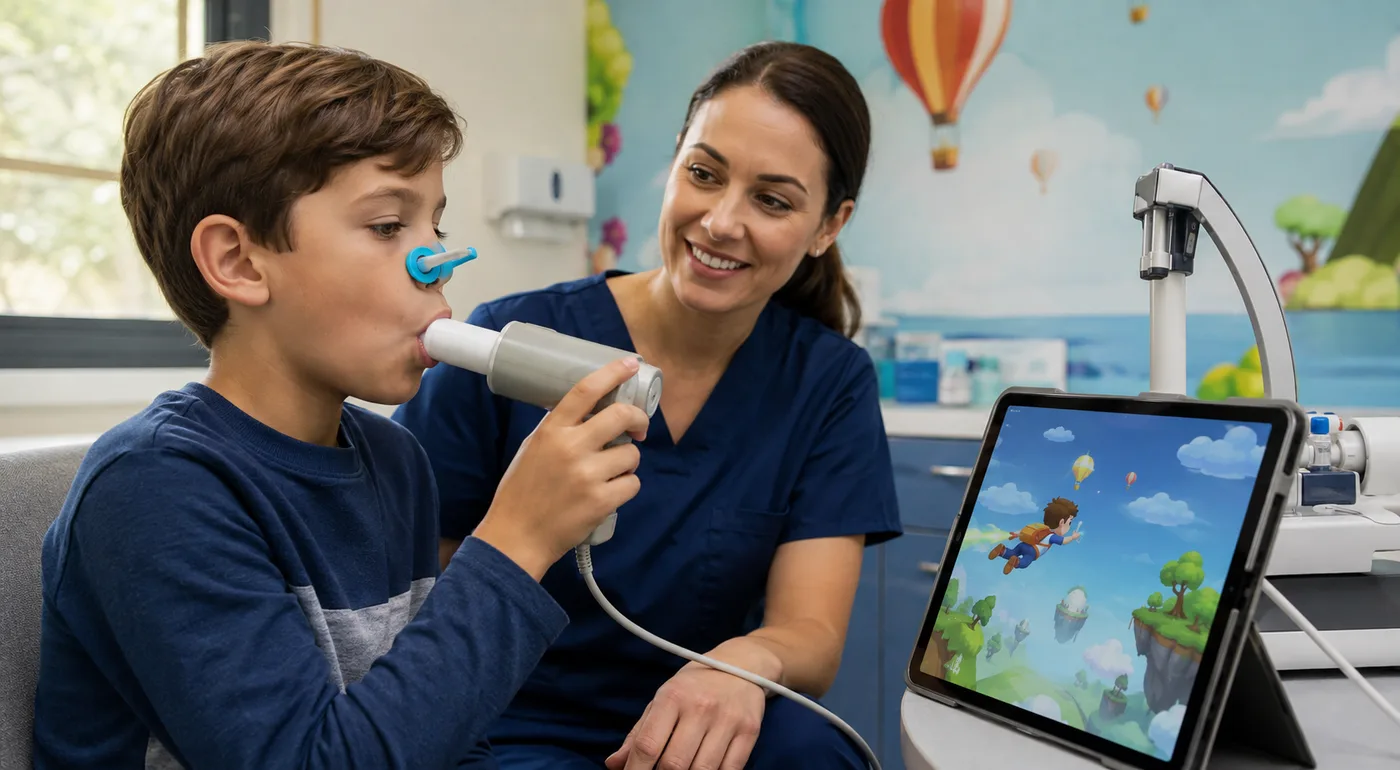
The Challenge
Spirometry is a lung-function test that measures how much air a child can blow out and how quickly they can blow it. It matters for asthma, cystic fibrosis, suspected asthma, and other respiratory conditions because poor-quality attempts can make it harder to diagnose, monitor, or adjust care.
The child has to understand a surprisingly hard sequence: seal lips around the mouthpiece, sit or stand with good posture, breathe in fully, blast air out hard and fast, keep blowing long enough, avoid coughing, and repeat the maneuver consistently. Younger children may stop early, leak around the mouthpiece, hesitate, cough, slump, give weak effort, or vary their breathing from attempt to attempt.
The Big Idea
Can breath itself control a car or jumping character, rewarding the forceful, sustained expiration required for an acceptable spirometry maneuver?
What a Jam Prototype Could Be
- A car or jumping-character game controlled by exhalation strength, fast start, smooth continuation, and duration.
- A mock spirometry input that maps breath values to speed, height, distance, or stability, with failure states for leaks, cough, early stop, weak start, or inconsistent attempts.
- A coaching loop where the character only succeeds when the child follows the whole sequence: big inhale, seal, blast, keep going, finish.
- A progress screen showing the proportion of acceptable maneuvers, the number of attempts required, and cooperation with testing.
- Inhaler technique and adherence could become a later extension, after the initial spirometry interaction is working.
Design Questions
- What minimum hardware or mocked input is realistic for a jam prototype?
- How can the game reward correct breathing instead of just forceful breathing?
- How should it adapt to younger children?
- How can it avoid unsafe overexertion?
What This Is Not
- Not a diagnosis tool, treatment order, or replacement for clinical judgment.
- Not a place to use identifiable patient data.
- Not expected to be a finished hospital product after 30 hours.
Why This Matters
A better practice loop could improve the proportion of acceptable spirometry maneuvers, reduce the attempts needed to complete testing, and improve cooperation.