Scanner-Prep Game for MRI Anxiety
Imaging Prep, Stillness Practice & Claustrophobia Support
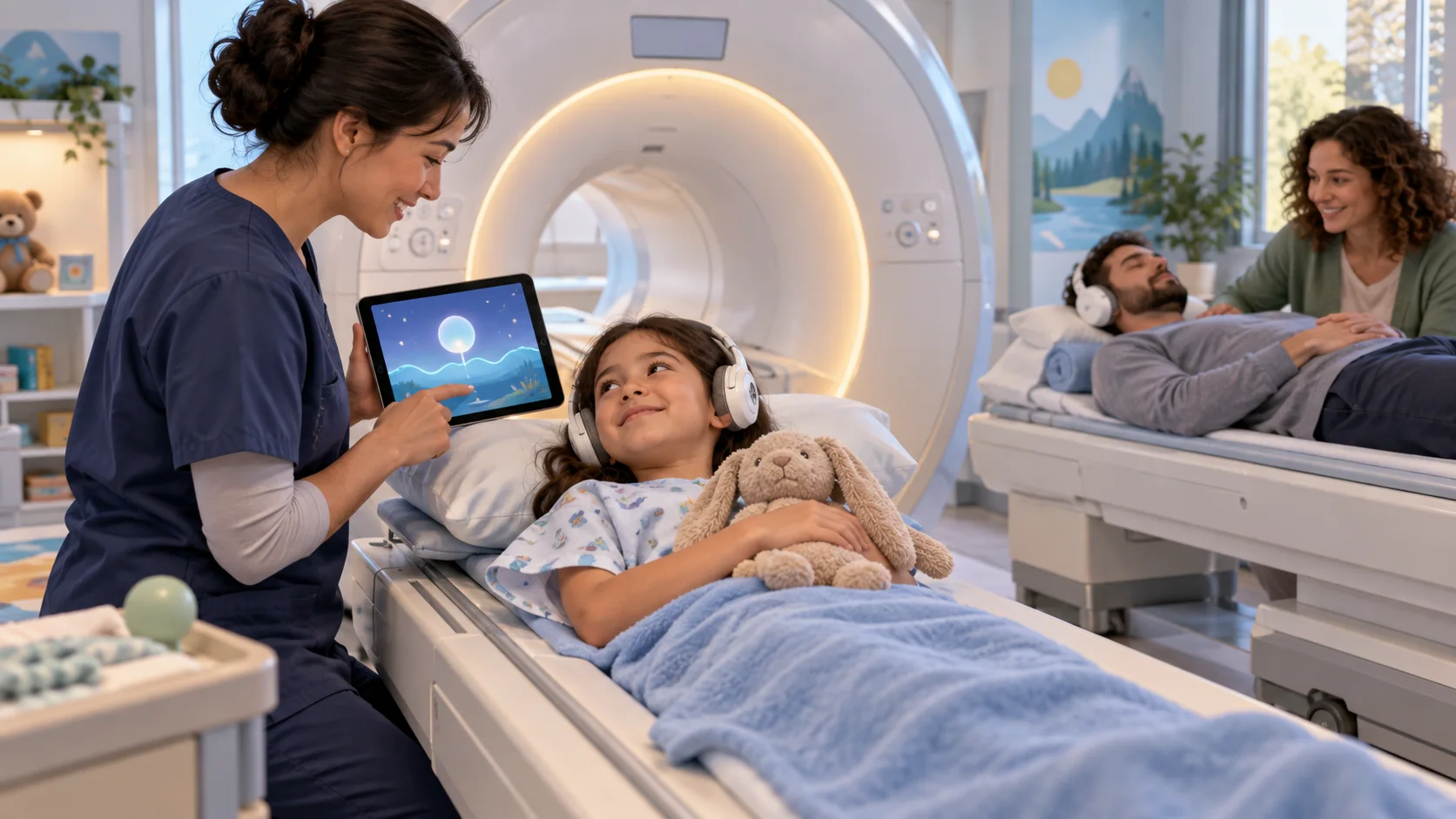
The Challenge
MRI depends on the patient staying still through a noisy, confined, and unfamiliar scan. For children, especially ages 6-18, anxiety and motion can corrupt scans, force repeat sessions, or lead to sedation or anesthesia. For adults with claustrophobia, the same environment can make the scan difficult or impossible to complete.
Patients often do not know what the scanner sounds like, why stillness matters, how long each segment lasts, or what an in-scanner task may ask them to do. Rehearsal can make the real scan feel less surprising.
Educational staff also see a simpler preparation gap: children may not understand what the MRI machine is doing, why it makes noise, why they must lie like a statue, or what will happen if they move. A game can turn that uncertainty into a practiced mission before the child reaches the scanner room.
The Big Idea
Can a game rehearse the scan before it happens, making stillness, scanner sounds, timing, and confined-space coping feel familiar enough to reduce anxiety and motion?
What a Jam Prototype Could Be
- A mission where a child or anxious adult earns rewards by holding still for short timed intervals.
- A child-facing MRI operator mode that explains how the machine takes pictures of the body and why each step matters.
- A sound-familiarization mode using simulated scanner sounds at controlled intensity.
- Practice versions of attention, reasoning, breathing, or motor-imagery tasks used in research scans.
- Short coping prompts for claustrophobia, such as predictable countdowns, guided attention, and optional pause planning.
- A parent, technician, or clinician view showing readiness, comfort level, motion/stillness practice, and which parts of the scan still worry the patient.
Design Questions
- How can stillness be rewarded without making the patient tense?
- What should happen when the patient moves?
- How should the game prepare patients without requiring MRI-compatible in-scanner hardware?
- Could a pirate-room style reference inspire the tone without copying it?
- Which preparation details should come from MRI technologists, pediatric radiology, pediatric anesthesia, child life, or pediatric psychology?
What This Is Not
- Not a diagnosis tool, treatment order, or replacement for clinical judgment.
- Not a place to use identifiable patient data.
- Not expected to be a finished hospital product after 30 hours.
Why This Matters
A calmer, better-prepared child can mean a better scan, less distress, fewer repeat procedures, and fewer cases where anesthesia is needed only because the child could not tolerate the scan.