Surgical Tool Recognition for OR Nurse Training
Operating Room Education, Instrument Trays & Visual Recognition
The Challenge
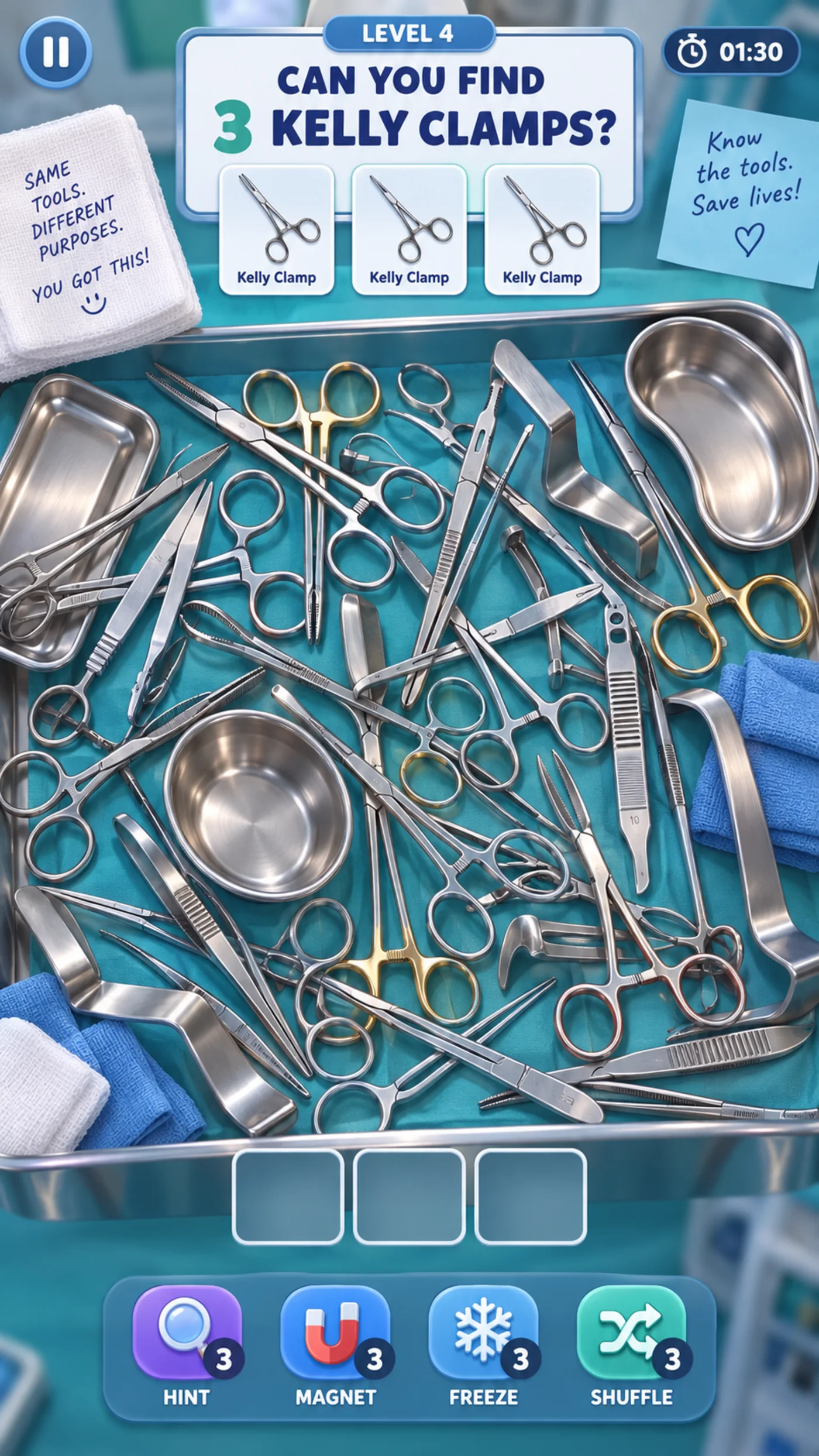
New nurses and OR staff must learn large sets of surgical instruments, prepare realistic trays, distinguish near-lookalikes, and hand the requested tool to the surgeon quickly under pressure. A wrong choice can slow the case, create stress for a new nurse, and frustrate the surgical team.
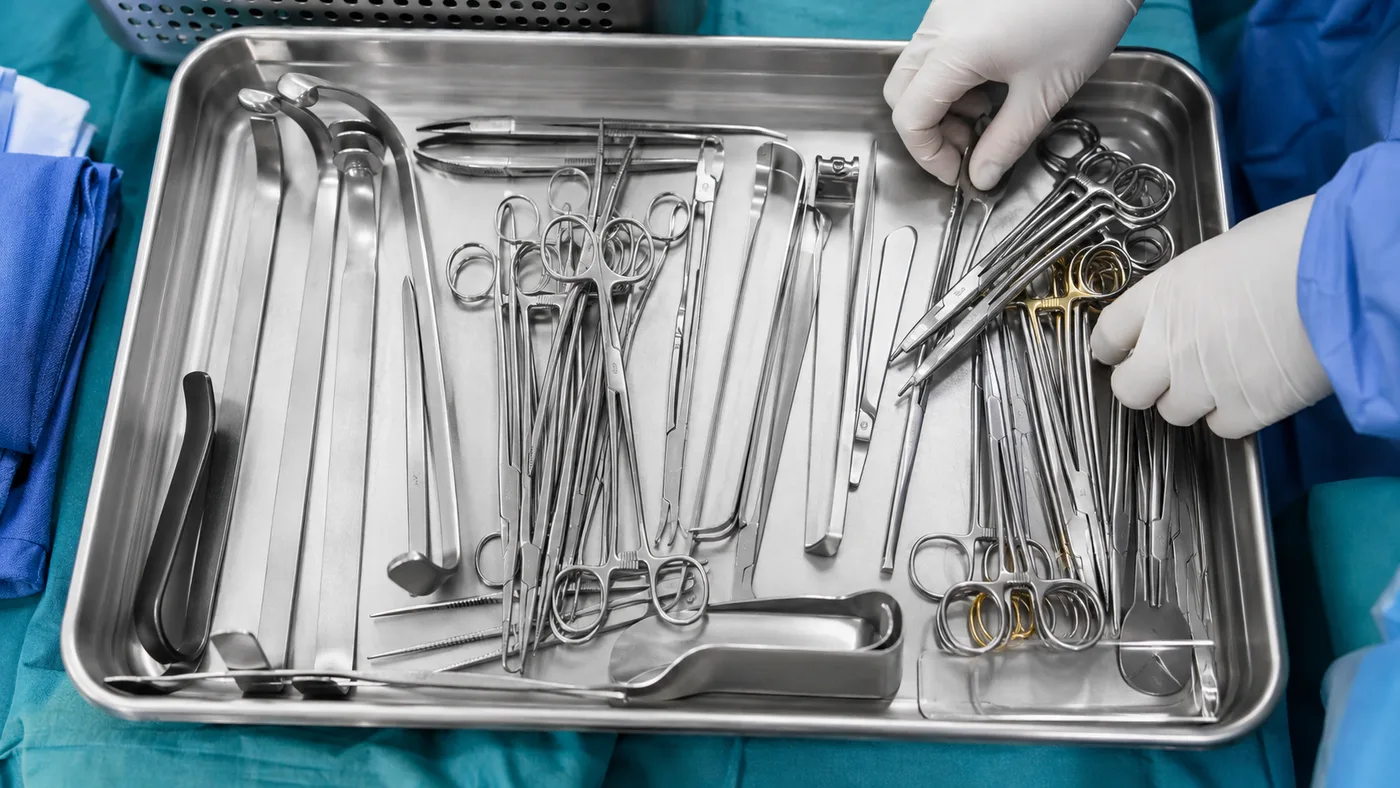
Static flashcards do not reproduce the visual conditions of a real tray: polished metal reflections, clutter, rotation, overlapping instruments, partial occlusion, unfamiliar viewing angles, and tools that differ only in jaw pattern, curvature, length, or locking mechanism.
A related robotics project at Sheba needs many of the same recognition scenarios for an industrial arm with a medical gripper. The human-training challenge stands alone, while generated tray layouts could optionally become synthetic test cases for robot vision and retrieval.
The Big Idea
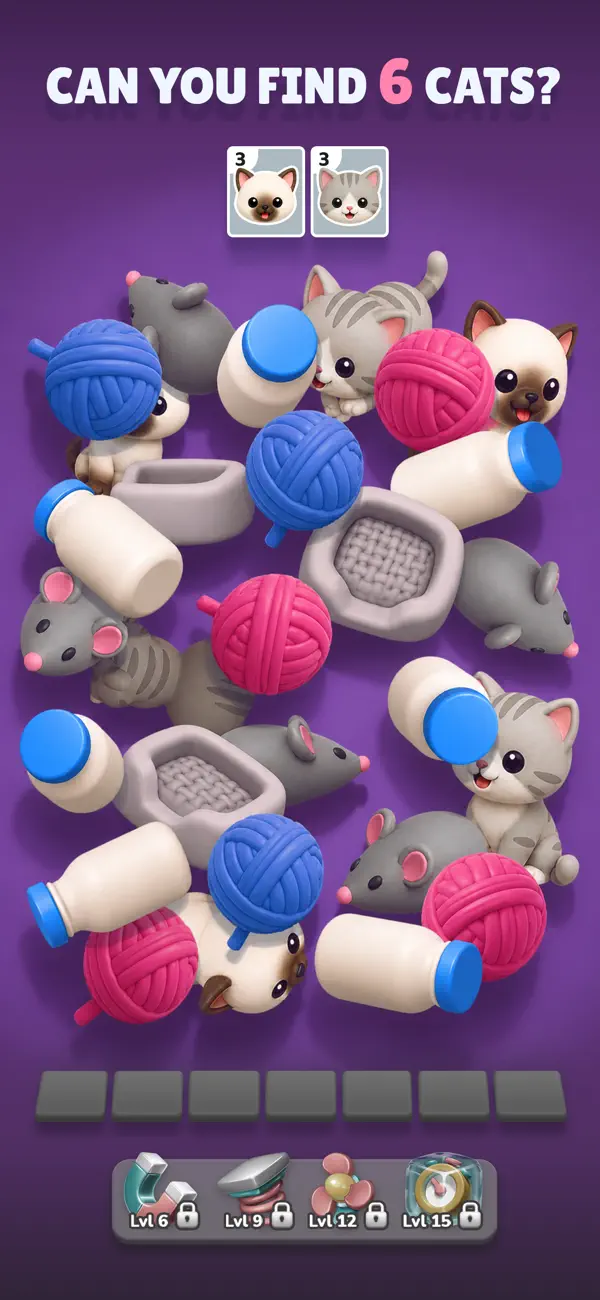
Use the object-search and matching loop of Triple Match 3D as one reference, then redesign it around real tray preparation and tool handoff. Teams may choose a completely different game loop if it trains the same skill more effectively.
What a Jam Prototype Could Be
- A 3D matching or search game using instrument models: find three of the same tool, sort a procedure tray, or pick and hand off the requested instrument.
- Three to five procedure-layout modes based on common surgeries, such as lumpectomy, hand surgery, and plastic surgery, where the player prepares the correct layout or identifies the surgery from the tray they see.
- Escalating difficulty with clutter, reflections, partial occlusion, rotation, and visually similar tools.
- Training contrasts such as Kelly clamp vs. Crile clamp or other lookalike instruments chosen by clinical reviewers.
- Immediate feedback explaining why the selected tool was right or wrong.
- Optional synthetic tray generator for robot-vision testing, if the team has computer-vision interest.
- Scenario modes for learning names, discriminating lookalikes, memorizing a procedure-specific tray, responding to a spoken request, and recovering after an incorrect choice.
Clinician-Provided Reference Examples
Matan shared early reference examples for lumpectomy and hand-surgery tray preparation. These are not a required design direction, but they show the kind of real layout knowledge the game could teach: recognizing procedure-specific sets, preparing the room correctly, and choosing the right supporting materials before the case begins.
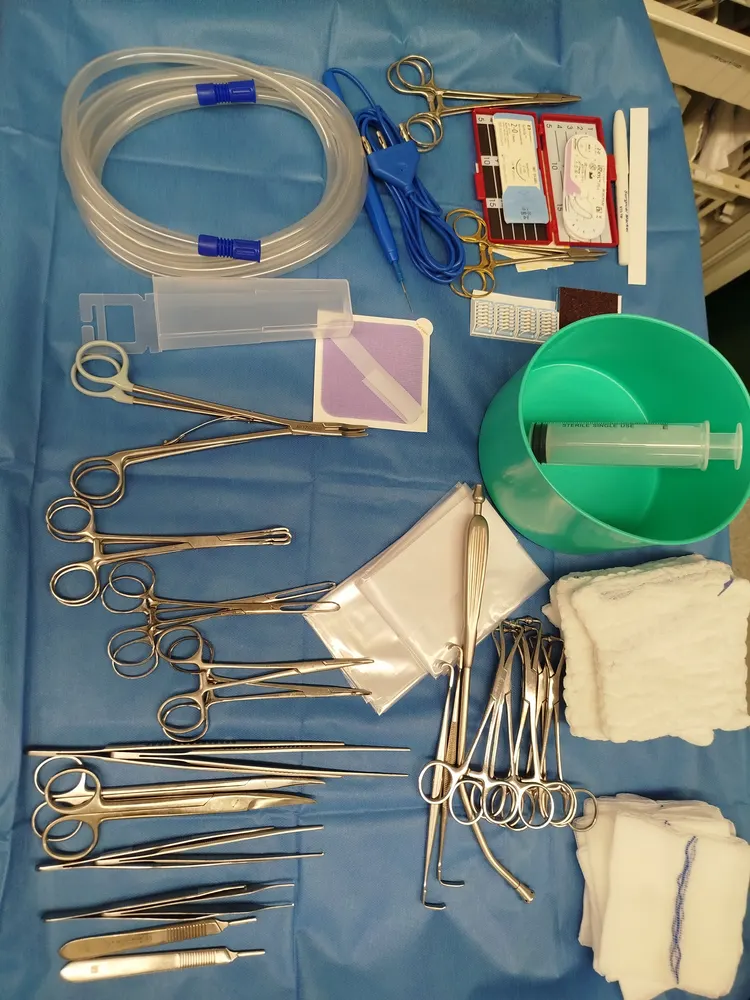
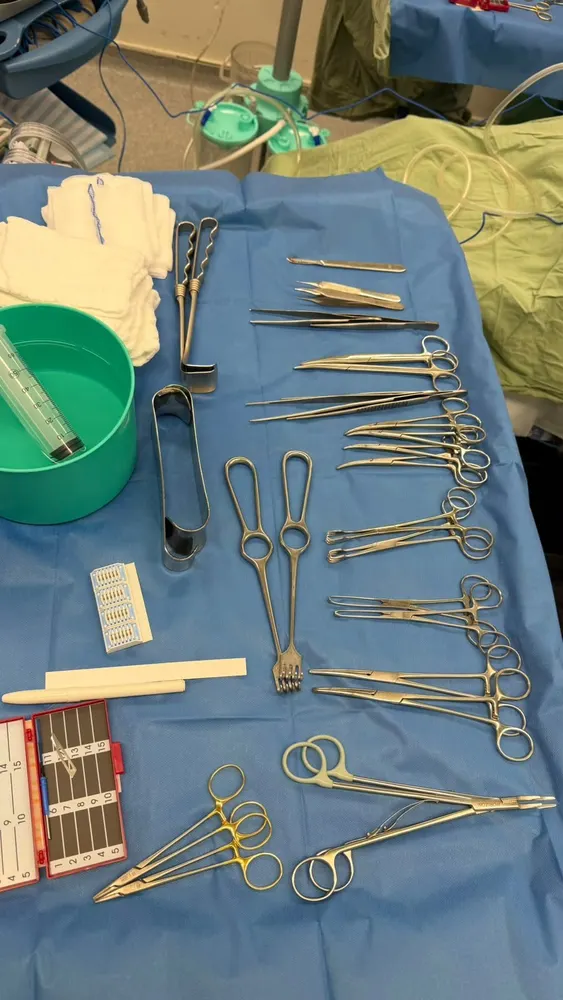
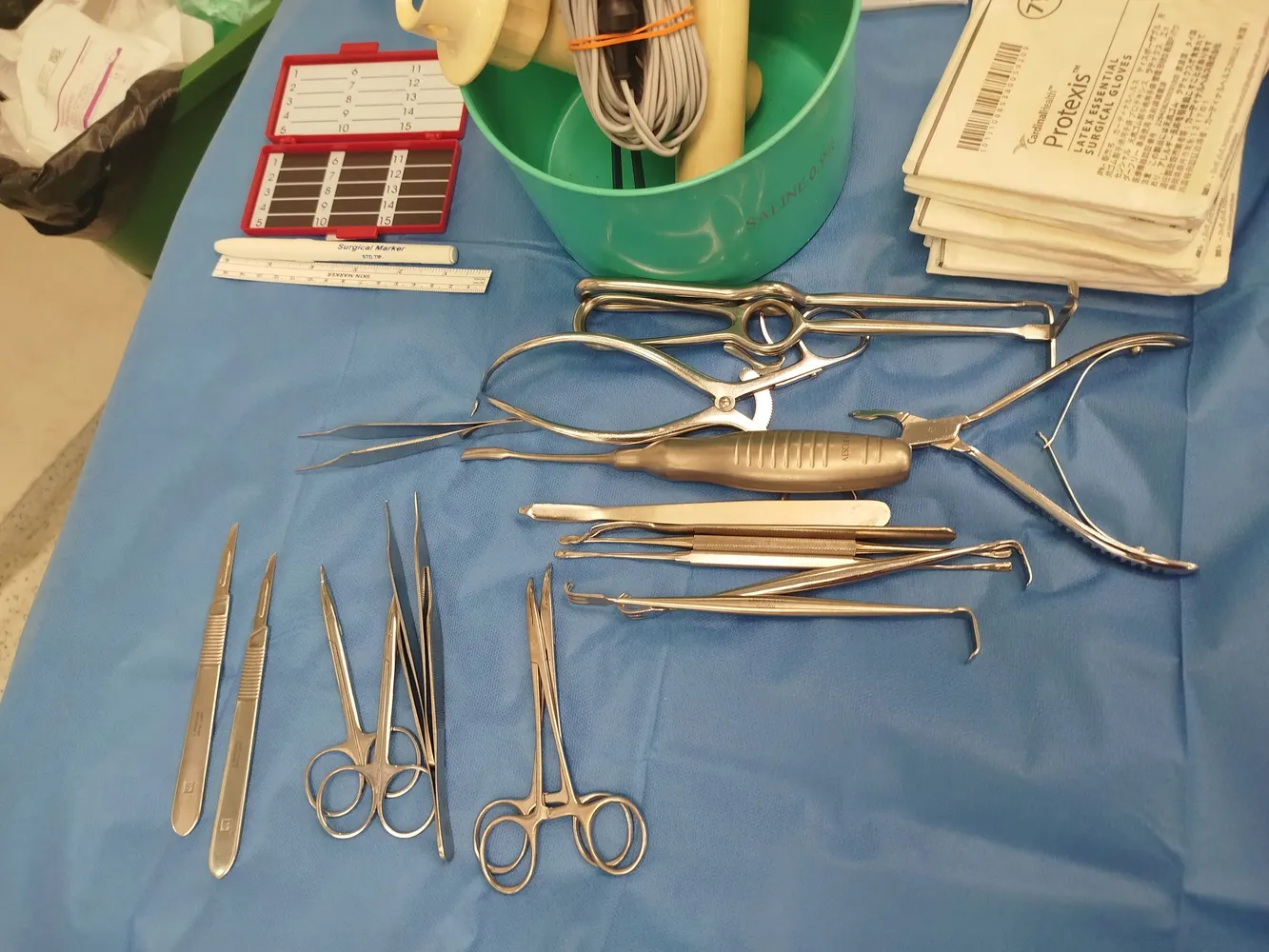
- Include supporting supplies, not only instruments: sponges, gauze, sterile towels, sutures, covers, bowls, motors, tables, and procedure-specific sets.
- Train suture categories, such as absorbable Monocryl, non-absorbable Nylon, and monofilament sutures.
- Practice matching room setup to the case, for example hand surgery kit, finger set, hand accessory set, table cover, wash basin, Stryker motor, and hand table for a basic hand surgery.
- Include scalpel blade decisions, for example #10 or #15 for lumpectomy, #15 for hand surgery, and #11 for laparoscopic surgery.
Design Questions
- Which instruments are most important for new OR staff to learn first?
- Which three to five common procedures should anchor the first tray-layout scenarios?
- What mistakes happen under pressure?
- Could players learn both directions: build the right layout for a named procedure, and identify a procedure from the layout shown?
- How can the game train subtle visual recognition without becoming a flashcard app?
- What assets can safely be used: approved training photos, synthetic models, or non-identifiable reference images?
- Should performance prioritize accuracy first, then speed, so pressure does not teach guessing?
What This Is Not
- Not a real-time intraoperative tool-selection system.
- Not a substitute for formal OR training or supervision.
- Not a place to use identifiable OR footage.
Why This Matters
The right prototype could help staff practice before the stressful moment, while also giving robot-vision teams a structured way to think about tray complexity.