EEG Prep Game for Children
Pediatrics / EEG / Procedure Preparation
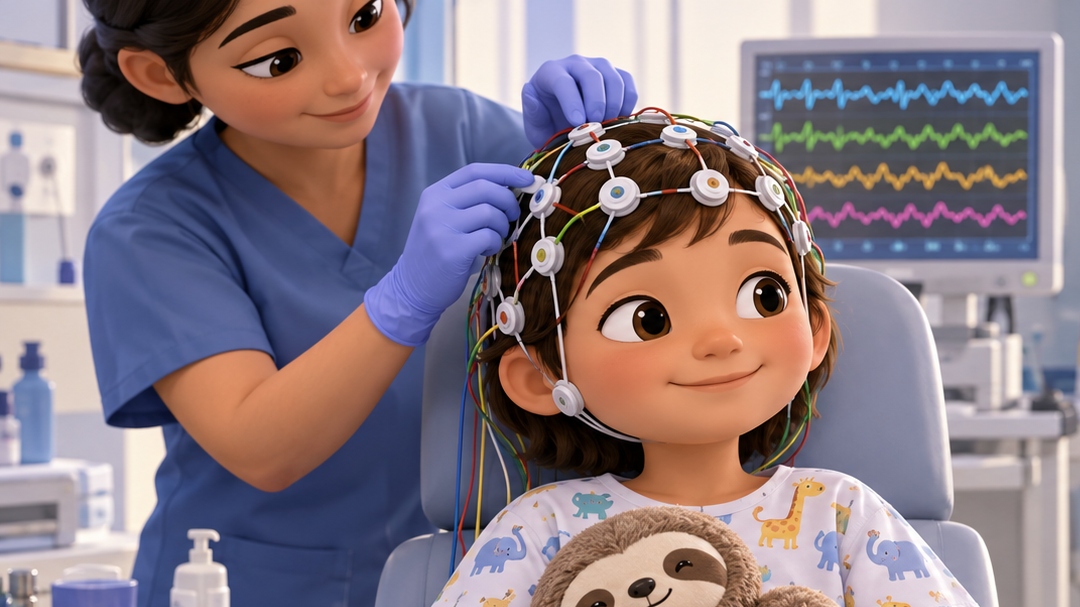
The Challenge
An EEG is a frequent, non-invasive neurological test that records electrical activity in the brain through multiple scalp electrodes attached with specialized paste. It may be routine, emergency, or prolonged video-EEG monitoring.
Children from toddlers through teenagers may fear the paste, electrodes, wires, darkness, flashing lights, controlled hyperventilation, or instructions to remain still, relax, and close their eyes. The need is especially acute for children with developmental delays, neurodevelopmental conditions, cognitive impairments, communication differences, or sensory sensitivities, who frequently require EEG testing.
Why Current Tools Fall Short
Staff currently use verbal step-by-step explanations, static photos, or demonstrations with paste and electrodes on a doll. These approaches can be too abstract, especially for children with developmental or communication challenges, and do not provide enough repetition or sensory predictability.
Resistance, crying, pulling off electrodes, or movement can prevent a usable recording and increase distress for the child, family, and technician.
Possible Directions
One possible direction is a highly visual, intuitive preparation and rehearsal experience with low-cognitive-load and sensory-friendly modes. It could introduce the room, staff, electrodes, specialized paste, wires, and safe recording, while explaining that the equipment listens to brain activity and does not read thoughts or deliver electricity.
The child could practice allowing electrode placement without pulling them off, staying still and relaxed, opening or closing the eyes, controlled breathing or hyperventilation when clinically appropriate, and tolerating dim light or flashing-light testing. The experience should adapt its language, pacing, communication, and sensory load to the child's developmental needs and the specific EEG protocol.
What Success Could Look Like
- Calm cooperation with electrode placement and fewer attempts to remove electrodes.
- Ability to stay still, relax, close the eyes, or follow another rehearsed instruction.
- Less movement artifact and more usable recording time.
- Fewer pauses and repeated explanations.
- Adapted access to preparation for children with special educational or communication needs.
Clinical Boundaries
Preparation should match the child's developmental and communication needs and the specific EEG protocol. Hyperventilation, flashing-light exposure, and other test instructions must be represented only with clinical guidance.