Reducing Pre-Operative Anxiety in Children Through Play
Pediatric Surgery, Preparation & Family Experience
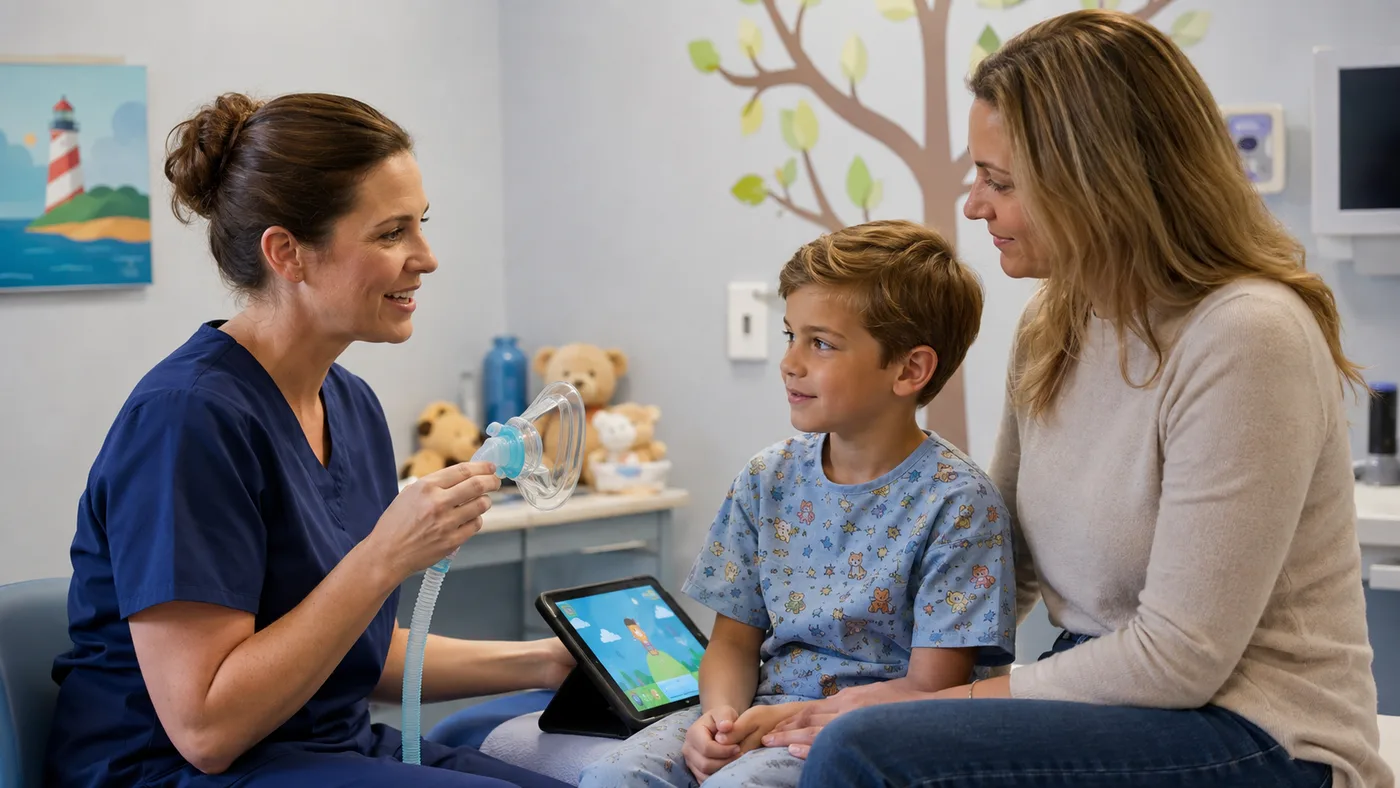
The Challenge
Children facing surgery encounter a sequence that can feel confusing and scary: a pre-surgery clinic visit, blood tests, fasting, changing into hospital pajamas, riding a bed to the operating room, seeing the operating room, wearing an anesthesia mask, falling asleep, and waking up afterward to see their parents. For many children, the unknown is the most frightening part.
This is a daily, high-volume issue for children from toddlers through age 18 undergoing elective or emergency surgery across ENT, general surgery, orthopedics, and other specialties. Anxiety can delay preparation, intensify perceived pain, increase the need for pre-medication or sedation, and leave a traumatic memory for the child and family.
Current preparation is often a nurse's explanation or a video sent to parents. These are passive, difficult for an anxious child to absorb, and often filtered through already-stressed parents. They do not reproduce the sensory sequence or give the child control.
Nurit suggests separating the journey into universal steps and customizable surgery-specific details. Universal steps include the hospital journey, clinic blood tests, fasting guidance (6 hours for food and 1 hour for clear liquids), early arrival, hospital pajamas, transport to the operating room, the mask and falling asleep, waking with parents nearby, and understanding that parents can ask the ward team for pain medicine so the child does not need to suffer.
The Big Idea
Can a child play through the surgical journey before the day of surgery, so the real experience feels familiar instead of terrifying?
What a Jam Prototype Could Be
- A playful game introduced during the several-hour pre-op clinic visit, days or weeks before surgery, then continued at home.
- A mission sequence covering fasting rules, clinic blood tests, hospital pajamas, bed ride, operating-room arrival, scented mask, falling asleep, and waking up with parents.
- A colorful animal-hospital or teddy-bear scenario where the child chooses an original toy or animal character to go through the journey, so the child can learn without frightening details becoming too vivid.
- Customizable procedure modules showing what the child may wake up with: a belly-button dressing for umbilical hernia, a groin-area dressing for inguinal hernia, armpit dressings for hyperhidrosis, a larger ear/head dressing with small tubes for microtia or ear-atresia repair, or casts/dressings on the arm or leg for orthopedic surgeries.
- A parent-child mode that keeps parents visibly nearby before sleep, after waking, and throughout the hospital stay: talking, comforting, petting, or singing to the child.
- A calm familiarization game the child can continue at home.
Design Questions
- How should teams present procedure-specific dressings clearly while keeping the tone calm and age-appropriate?
- How can teams create original toy or animal characters that feel familiar and comforting without using copyrighted characters?
- How should parents be represented as active emotional support without making the game feel too clinical or too scripted?
- Could success be measured by calmer arrival, cooperation during mask induction or IV placement, shorter preparation time, fewer delays, lower sedative use, and improved family satisfaction?
What This Is Not
- Not a diagnosis tool, treatment order, or replacement for clinical judgment.
- Not a place to use identifiable patient data.
- Not expected to be a finished hospital product after 30 hours.
Why This Matters
Giving children predictability and agency before surgery can reduce distress for patients, parents, and staff. The defining moment would be a child who recognizes the environment, cooperates with the team, and wakes prepared for a dressing, drain, or cast rather than shocked by it.